
Nvidia has spent most of 2026 upgrading DLSS piece by piece, but the latest update may be the one graphics nerds care about most. At Computex 2026, the company announced DLSS 4.5 Ray Reconstruction, a new version of its AI-based denoising system for ray-traced and path-traced games, and it is scheduled to arrive in August 2026. Nvidia says it will also come to Blender 5.3 this fall, extending the tech beyond games and into creative workflows.
That matters because Ray Reconstruction has always been the most specialized member of the DLSS family. Upscaling gets the headlines. Frame Generation gets the arguments. Ray Reconstruction is the quieter part of the stack that tries to make ray tracing stop looking like it is having a small crisis every time lighting gets complicated.
Check out my other article: PC Gaming Spending 2026: Middle Class Is Getting Richer
What Ray Reconstruction Actually Does
At a basic level, DLSS Ray Reconstruction replaces traditional hand-tuned denoisers with an AI model. In ray-traced scenes, game engines often do not cast enough rays to fully resolve every pixel cleanly, so the image has to be reconstructed from noisy partial information. Nvidia’s model uses engine inputs to infer what those missing or unstable areas should look like, aiming for cleaner, sharper, and more stable final images.
In plain English, it is the part of the pipeline that tries to stop reflections, shadows, and lighting details from shimmering, smearing, or turning into suspicious-looking mush. Ray tracing can be gorgeous, but without good reconstruction, it can also look like your GPU is guessing through gritted teeth.
What Is New in DLSS 4.5 Ray Reconstruction
Nvidia says the new version uses a second-generation transformer model. According to the company, that model can process 35% more input data and use 20% more parameters while staying within the same compute budget as the previous transformer architecture. The goal is better image quality without turning the feature into a luxury item for only the newest hardware.
The company also says the updated model benefits from the broader advances introduced with DLSS 4.5, including improved spatial awareness and better handling of input data. The result, in Nvidia’s telling, is more accurate lighting, clearer motion, and more stable images overall. It has also been trained on a larger dataset, and developers get more control over temporal accumulation behavior, which should help reduce artifacts and improve consistency across different games.
Unlike Some DLSS Upgrades, This One Is Not Leaving Older RTX Cards Behind
One notable detail here is compatibility. Nvidia says DLSS 4.5 Ray Reconstruction works on all GeForce RTX GPUs, including the RTX 20-series and RTX 30-series, rather than being restricted to the newest generation. That makes this a more broadly useful update than some of DLSS’s newer, more performance-hungry features.
That is a smart move. Ray Reconstruction is fundamentally an image quality feature, so keeping it available across the RTX install base gives Nvidia a much easier sales pitch: better-looking ray tracing without the usual “please also buy an expensive new card” fine print attached. Well, not this time anyway.
Nvidia Is Selling the Upgrade on Visual Stability, Not Just Marketing Vocabulary
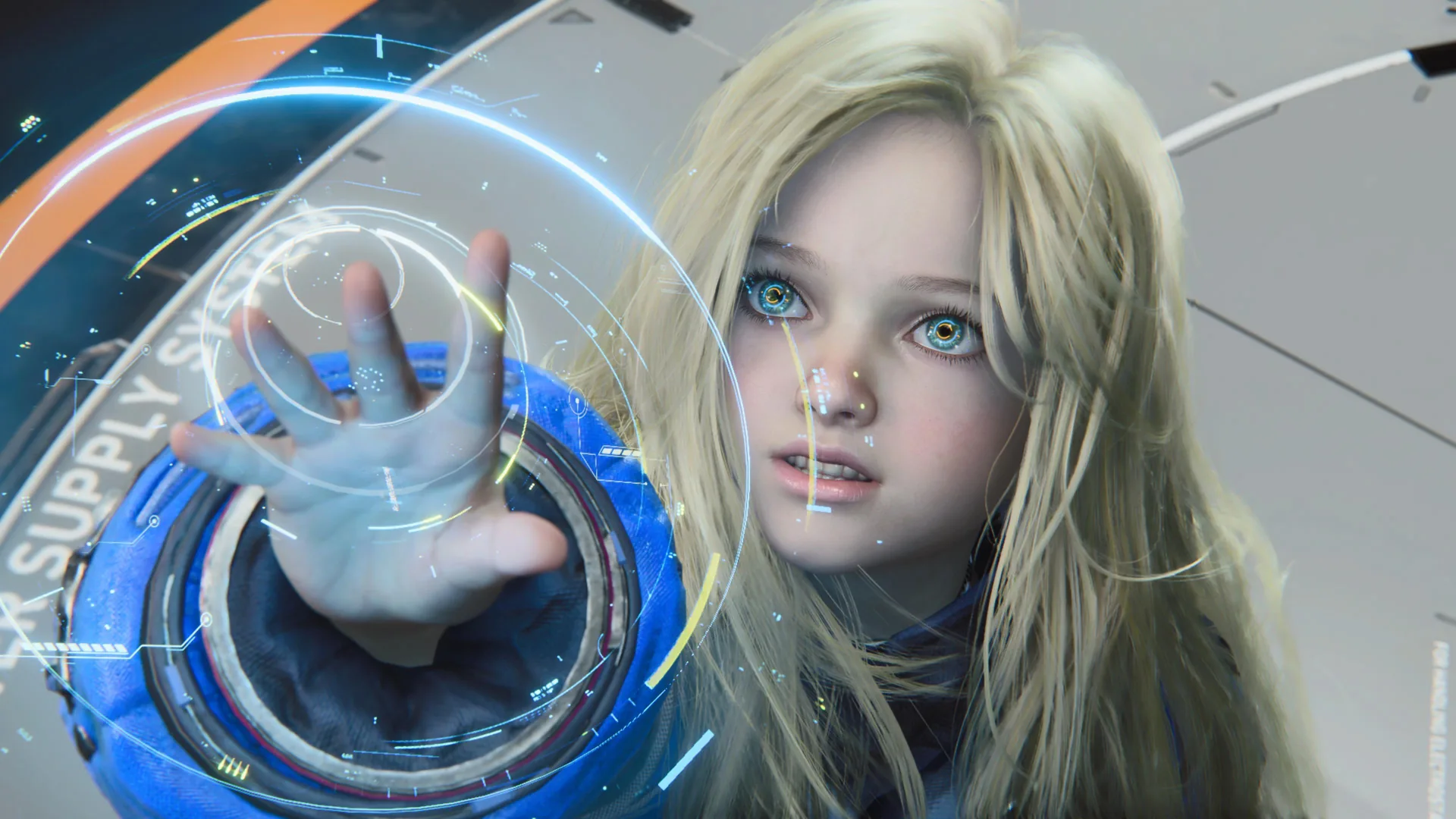
Nvidia’s examples focus on exactly the sort of scenes where ray tracing tends to reveal its bad habits. In Pragmata, the company highlights improved handling of flickering laser traps and reduced lingering artifacts after those effects disappear. In Alan Wake II, Nvidia points to cleaner CRT static on a wall of televisions and more convincing reflections from those displays on the floor.
That is the right pitch. Ray tracing image quality usually does not fall apart in static beauty-shot screenshots. It falls apart in motion, in noisy lighting, in fine detail, and in scenes with lots of unstable reflections or effects. So if Nvidia can make those moments look more coherent, the improvement will feel more real than another before-and-after crop selected by a marketing team with a grudge against subtlety.
It Is Rolling Out to Games First, Then Blender
Nvidia says DLSS 4.5 Ray Reconstruction will come to 27 games in August through the Nvidia App, and it specifically names titles such as Cyberpunk 2077, Hogwarts Legacy, Pragmata, and Resident Evil Requiem among the supported lineup. The company also says the same technology is headed to Blender 5.3 in the fall, where it will work alongside Nvidia OptiX to make the viewport more interactive and closer to final-quality output while navigating scenes.
That Blender angle is particularly interesting because it hints at where Nvidia wants this technology to live long term. Not just as a gaming feature, but as part of a broader real-time rendering stack for creators too. If the viewport becomes more stable and less interruption-prone while moving around a scene, that is not just a prettier demo. That is workflow improvement, and workflow improvement is where graphics tech starts sounding less like hype and more like infrastructure.
The Bigger Picture
The broader story is that Nvidia is no longer treating DLSS as one thing. It is now a family of increasingly specialized neural rendering tools: upscaling, frame generation, multi frame generation, and ray reconstruction, each getting its own upgrades and its own role in the graphics stack. DLSS is becoming less like a feature checkbox and more like Nvidia’s answer to the whole rendering pipeline.
And that makes Ray Reconstruction more important than it may first appear. Fancy path tracing demos are nice, but the real challenge is making them look stable enough in real gameplay that players stop noticing the machinery. That is what this update is really chasing: not just prettier ray tracing, but ray tracing that looks less like an ongoing negotiation between ambition and noise.
Final Thoughts
DLSS 4.5 Ray Reconstruction looks like Nvidia’s attempt to improve the least glamorous but most necessary part of modern ray-traced graphics: cleaning up the mess. It is arriving in August 2026, it runs on all RTX GPUs, and Nvidia is betting that a second-generation transformer model, more training data, and better temporal behavior will make ray-traced scenes look more stable and convincing in motion.
That is not the flashiest graphics announcement of the year. But it may end up being one of the more important ones. Because in the end, better ray tracing is not just about adding more light bounces. It is about making all that expensive lighting stop looking weird.
