
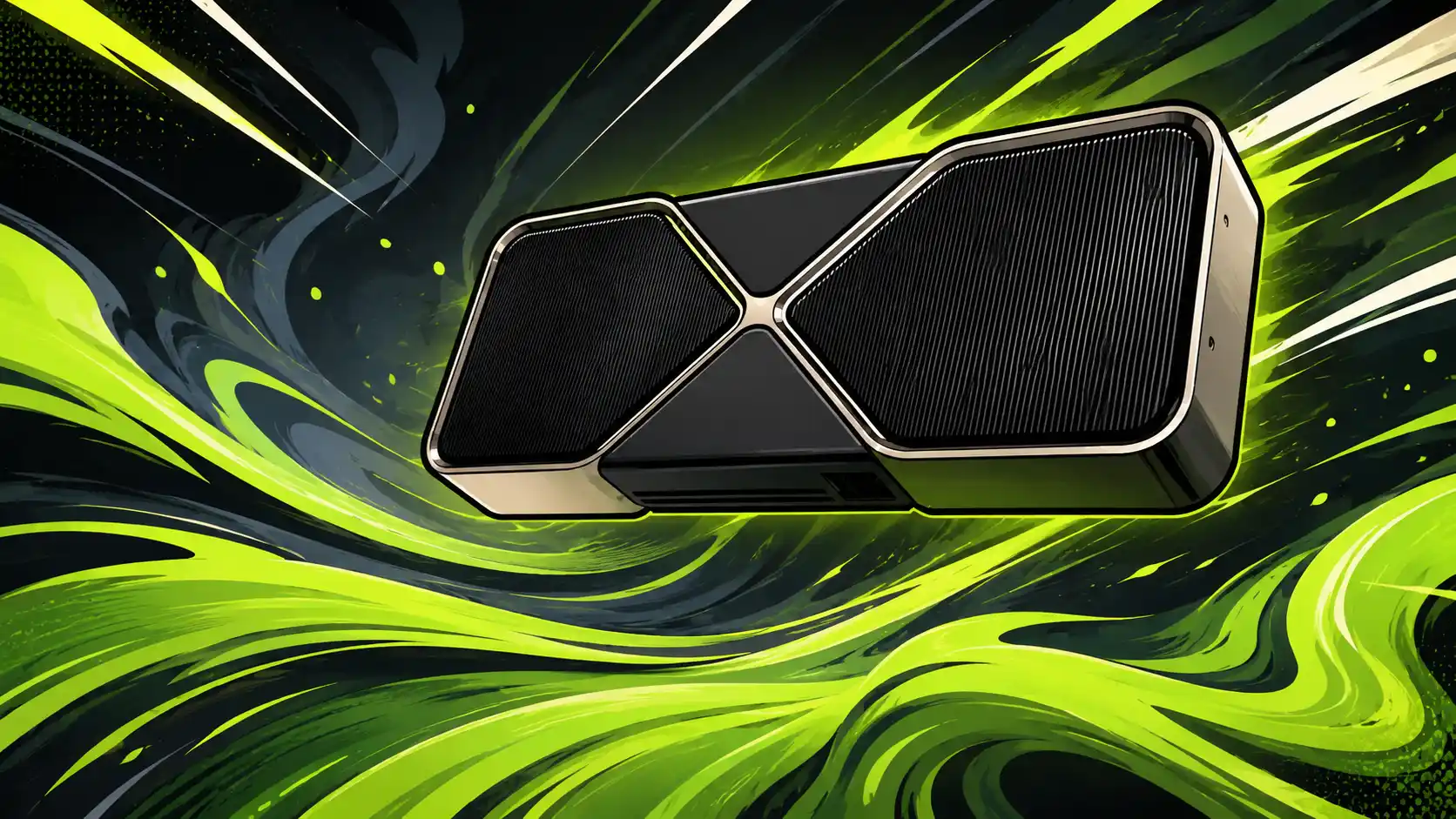
The most interesting thing about the latest GeForce RTX 5080 SUPER rumor is not just the wattage.
It is what that wattage implies.
A new entry spotted in Seasonic’s PSU wattage calculator appears to list an RTX 5080 SUPER with a 415W TDP, up from the 360W rating of the existing RTX 5080. Nvidia has not officially announced an RTX 5080 SUPER, so this should still be treated as an unconfirmed leak rather than a product reveal. But if the number is accurate, it points to a refresh that is not trying to reinvent the card so much as push it harder: more memory, more bandwidth, and more power draw to go with it.
That would fit the broader shape of the rumored specs that have been circulating for months. The talk around the RTX 5080 SUPER has consistently centered on a move to 24GB of GDDR7, a 256-bit bus, and 32 Gbps memory, which would raise bandwidth to 1 TB/s. In other words, this does not look like a radically different GPU. It looks like Nvidia taking the existing 5080 formula and leaning harder into the parts that are easiest to market in 2026: memory capacity and throughput.
The 415W Figure Matters Because the Base RTX 5080 Is Already No Lightweight
Officially, Nvidia lists the RTX 5080 with 16GB of GDDR7 and 960 GB/s of memory bandwidth, while partner specs such as MSI’s list its board power at 360W. If the SUPER model really lands at 415W, that would be a roughly 15% jump in power for what is, at least in current rumor form, a card with the same CUDA core count as the standard version.
That is what makes this refresh interesting. Nvidia would not be spending another 55 watts just for fun, despite what flagship GPU design occasionally suggests. The likely explanation is that the extra power budget would support a combination of higher clocks and heavier memory configuration, especially if the card is moving to denser 3GB GDDR7 modules and faster memory speeds.
This would also be consistent with the modern GPU industry’s favorite trick: keep the silicon broadly familiar, then squeeze more product differentiation out of memory and board power.
This Looks More Like a Bandwidth Refresh Than a Core Count Revolution
That distinction matters.
The rumored RTX 5080 SUPER is widely expected to keep the same 10,752 CUDA cores as the existing RTX 5080, using a different GB203 SKU but not necessarily adding more SMs. If that holds, then the performance pitch would likely come from:
- 50% more VRAM: 24GB instead of 16GB
- Higher memory speed: 32 Gbps instead of 30 Gbps
- More bandwidth: 1024 GB/s instead of 960 GB/s
- Potentially higher clocks, depending on final tuning
So this is not shaping up as a “new class” of card. It is shaping up as a more muscular version of the same class, aimed at buyers who want extra memory headroom and slightly more performance without jumping all the way to something like a 5090-tier product.
That makes strategic sense. VRAM has become one of the easiest pressure points in enthusiast GPU discourse. Whether every game truly needs more memory is almost beside the point. Buyers increasingly want it, reviewers increasingly discuss it, and Nvidia has every reason to turn that anxiety into an upsell path.
Also read: Bolt Wants to Crash the GPU Competition and It’s Starting With Creators, Not Gamers
The Catch Is That This Rumor Exists in a Very Messy Market
The bigger context here is just as important as the leak itself.
Reports earlier this year suggested Nvidia’s RTX 50 SUPER plans had been delayed, with memory shortages and AI-related prioritization affecting the timing of consumer GPU refreshes. Tom’s Hardware reported in February that Nvidia might not release any new GeForce gaming GPUs in 2026, citing reports of GDDR memory constraints and production focus shifting toward higher-margin AI hardware. That does not prove the SUPER cards are dead, but it does explain why these products have remained stuck in rumor limbo for so long.
That is what makes the Seasonic calculator entry notable. It does not confirm a launch, but it does suggest the RTX 5080 SUPER still exists as a meaningful enough part number to show up in supply-chain-adjacent tools. Whether that means “launch is getting close” or merely “partners are aware of the target spec” is much harder to say.
More Power for More Memory Is a Very Nvidia Solution
If the rumored spec sheet holds, the RTX 5080 SUPER would say something pretty familiar about Nvidia’s current design philosophy.
When faced with competitive pressure, rising workload demands, and increasingly vocal complaints about VRAM limits, Nvidia’s answer often is not to build a dramatically different product. It is to make the existing one faster, hungrier, and more expensive-looking on paper.
That sounds harsher than it is. There is a logic to it. A 24GB, 1TB/s-class RTX 5080 SUPER would be easier to position for high-end gaming, heavy ray tracing, AI-assisted workloads, and creator tasks than the base 16GB model. It would also be easier to justify as a late-cycle premium refresh. But the tradeoff appears to be exactly what you would expect: more wattage, more thermals, and more pressure on PSU and cooling requirements.
In other words, this is progress in the very modern GPU sense of the word: yes, it is better, but it also wants a little more electricity and probably a little more patience.
The Real Question Is Timing
Right now, that is still the biggest unknown.
There is no official Nvidia announcement, no launch date, and no public board-partner rollout. Some reports continue to suggest a late 2026 or even CES 2027 window, but those are still speculative. Given how fluid the memory market has been, and how aggressively Nvidia has prioritized AI hardware where margins are richer, it would not be surprising if timing remained flexible until the last minute.
So the smart reading here is not “RTX 5080 SUPER confirmed.” The smart reading is that the outlines of the card continue to look consistent: same general GPU tier, more VRAM, more bandwidth, and a meaningful bump in power to make the package hold together.
Final Thoughts
If Seasonic’s listing is accurate, the rumored RTX 5080 SUPER is shaping up to be a very Nvidia kind of refresh: not revolutionary, but undeniably beefier. A jump from 360W to 415W would be substantial, especially if the card’s biggest visible changes are 24GB of GDDR7 and 1TB/s of bandwidth rather than a major expansion in core count.
That would make the card easy to understand, if not necessarily easy to power.
More memory. More bandwidth. More watts.
The only thing missing now is Nvidia actually admitting it exists.
