
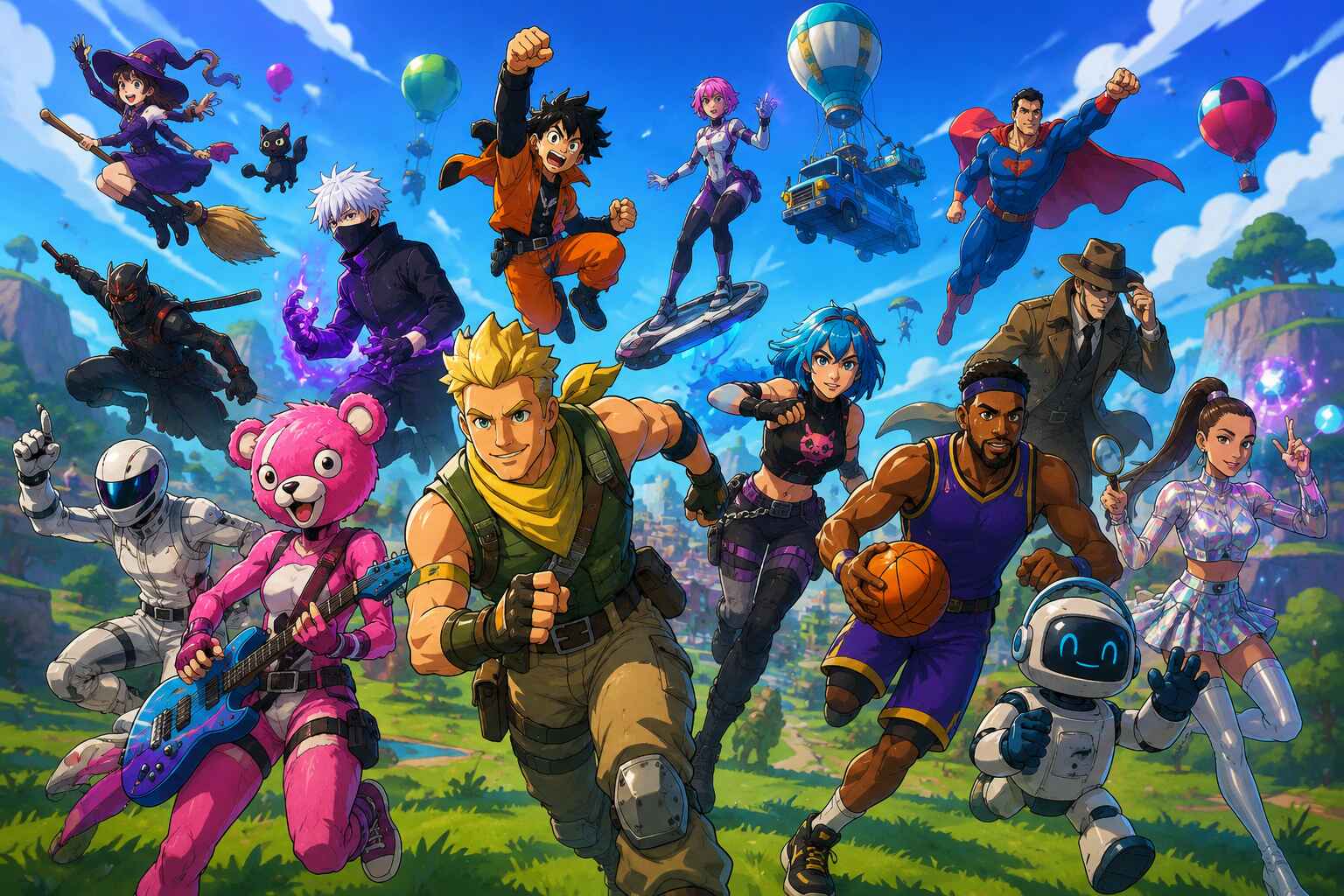
At first glance, these collaborations seem like fan service—a fun way to let players dress up as their favorite characters. But beneath the flashy trailers and limited-edition skins lies a carefully calculated business strategy. Modern video game crossovers aren’t just about entertainment; they’re about keeping live-service games alive, profitable, and culturally relevant.
Gaming has officially become the world’s weirdest crossover episode.
Whether it’s Mobile Legends: Bang Bang x Street Fighter 6, PUBG Mobile x Naruto, Fortnite x literally anything with a fanbase, or Call of Duty featuring celebrities who probably wouldn’t survive five minutes in an actual war, collaborations are everywhere.
Let’s look at why nearly every successful live-service game eventually starts borrowing everyone else’s characters.
Also read: Steam’s $11 Billion 2026 Revenue Reveals the Real Power of Old Games
1. Your Game Is Already Famous. Now What?
Every game begins with the same challenge: “Please notice us.”
Marketing campaigns, trailers, influencers, tournaments, Twitch drops—everything is designed to answer one question:
Do people even know this game exists?
But eventually, the biggest games hit a ceiling. Fortnite doesn’t need to introduce itself anymore. Neither does Mobile Legends.
At this point, almost every gamer already knows these games exist. If someone isn’t playing them, it’s usually because:
- they’re simply not interested,
- they got bored and moved on,
- or they’re busy losing sleep in another game instead.
This changes the entire marketing strategy.
Instead of convincing new people that the game exists, publishers need to convince former players that today is somehow different from yesterday.
A collaboration is the perfect excuse.
“Oh, Fortnite again.”
…becomes…
“Wait… Superman is in Fortnite?”
Mission accomplished.
2. Live-Service Games Need Something Exciting Every Few Weeks
Single-player games can release once, collect awards, and peacefully retire. Live-service games don’t have that luxury.
They’re like restaurants that must invent a “limited-time special” every month because people eventually get tired of ordering the same burger.
Players expect constant updates:
- new events
- battle passes
- cosmetics
- missions
- menus
- trailers
- announcements
Developing entirely new gameplay systems every few weeks would cost a fortune. A collaboration, however, instantly creates an entire season’s worth of content.
One licensed character can generate:
- login rewards,
- limited quests,
- themed music,
- special game modes,
- marketing campaigns,
- YouTube videos,
- Twitch streams,
- social media discussions.
That’s an impressive amount of content generated from a single partnership.
3. They’re Borrowing Entire Communities
This is probably the smartest part. When PUBG Mobile collaborates with Naruto, it isn’t simply borrowing Naruto. It’s borrowing millions of Naruto fans.
Some of those fans quit PUBG years ago. Some never played it. Some only installed it because a friend wouldn’t stop sending them collaboration trailers at two in the morning.
The collaboration creates curiosity.
“I don’t really play PUBG…”
“…but I kind of want to see Kakashi throwing smoke grenades.”
Download. Mission accomplished. This strategy works because fan communities already exist.
Publishers don’t need to build emotional attachment from scratch—they temporarily rent it.
4. Collaborations Keep Games Part of Pop Culture
Games aren’t just competing against other games anymore. They’re competing against Netflix. TikTok. YouTube. Instagram. Spotify.
Your attention span.
Modern entertainment is basically a giant battle royale where every app is trying to eliminate the others. A collaboration helps a game escape the gaming bubble.
Instead of gaming websites saying,
“Fortnite released another skin.”
Entertainment websites now say,
“Fortnite adds Superman.”
Comic fans discuss it. Movie fans discuss it. People who haven’t touched the game in years suddenly have an opinion. One collaboration creates conversations across multiple audiences.
That’s incredibly valuable in an internet economy where attention is the most expensive currency.
Check out my other article: Esports Has 400 Million Gen Z Fans and a Business Model That Still Barely Works
5. Familiar Faces Beat Original Characters on Social Media
Imagine scrolling through your feed.
Post A:
“Introducing our new original warrior!”
Post B:
Naruto.
Which one makes your thumb stop? Publishers already know the answer.
Recognizable characters generate more clicks, more shares, more comments, and more reaction videos simply because people recognize them instantly.
The algorithm loves familiarity. Fans love familiarity. Marketing teams definitely love familiarity.
Sometimes the hardest-working employee in a game’s marketing department isn’t a human. It’s nostalgia.
6. Why Risk Creating New Icons When You Can License Existing Ones?
Creating a successful original character is difficult. Designers might spend months creating a legendary skin.
Players might…
…completely ignore it.
Nobody can predict what becomes iconic.
Batman doesn’t have that problem. Naruto doesn’t have that problem. Street Fighter doesn’t have that problem. Their popularity has already survived decades of market testing.
Licensing a famous character doesn’t eliminate risk entirely, but it dramatically reduces one of the biggest uncertainties in game monetization:
Will players actually care?
Sometimes paying licensing fees is cheaper than gambling millions on an original design that nobody remembers two weeks later.
7. Games Are Slowly Becoming Digital Theme Parks
This might be the biggest shift of all. Games like Fortnite aren’t trying to tell one consistent fictional story anymore. They’re becoming entertainment platforms.
Think about Disneyland. Nobody asks why pirates, superheroes, space adventures, and talking mice exist in the same place. People accept it because Disneyland isn’t one story. It’s a place where many stories meet.
Fortnite operates similarly. Its identity isn’t built around a single universe anymore. It’s built around being the place where every universe can visit.
Today it’s Marvel. Tomorrow it’s anime. Next month it could be a rock band, a football legend, or a blockbuster movie.
The game itself becomes the destination. Ironically, the collaboration is no longer the attraction. The platform is. Yes, yes. This is that “metaverse” idea.
It turns out it was kind of true, after all. Albeit, we didn’t actually need crypto, NFTs, VR, or any of those other tech-bro Web3 inventions to make it real.
8. Games Aren’t the Only Ones Benefiting
It’s easy to think that collaborations are simply game publishers borrowing famous characters. But that’s only half the story.
The owners of those characters also have something to gain. Movies need audiences. Anime needs viewers. Comic books need readers. Toy companies need customers. Streaming platforms need subscribers.
And today, one of the biggest places to reach all of them is… video games.
Think about it.
A new Marvel movie spends hundreds of millions of dollars on advertising. A Fortnite collaboration puts Spider-Man in front of millions of active players who might not have watched the latest film.
A Naruto collaboration reminds an entire generation why they loved the series in the first place—and introduces it to younger players who weren’t even born when Naruto first aired.
It’s marketing that people voluntarily interact with.
Instead of watching a 30-second commercial before a YouTube video, players willingly spend hours running around dressed as their favorite character. That’s a level of engagement traditional advertising can only dream of.
This is why collaborations are increasingly timed with major releases. A movie launches.
A TV series premieres. A new anime season begins. And suddenly, there’s a collaboration in your favorite game.
Coincidence? Almost never.
Games have become one of the world’s largest entertainment stages, and every major intellectual property wants a spot under the spotlight.
The relationship isn’t simply “games licensing famous characters.” It’s two entertainment industries promoting each other. And as games continue attracting billions of players worldwide, that partnership will likely become even more valuable.
Conclusion: It’s Not a Trend—It’s a Business Model
If you’ve noticed more collaborations over the past few years, you’re not imagining things.
They’re becoming the new normal—but not because game developers suddenly ran out of original ideas.
Well… they could have. Almost definitely.
But there are also countless iconic IPs that have survived far longer than most corporate careers, just waiting to be borrowed.
For publishers, collaborations bring back former players, create headlines, reduce creative risk, and generate millions in cosmetic sales.
For movie studios, anime publishers, musicians, comic book companies, and sports brands, games offer access to one of the largest and most engaged audiences on the planet.
Everybody wins.
Well… except your wallet.
