
The 16-pin GPU power connector saga continues, because apparently the PC industry has decided that one of its most expensive components should also come with a light dose of anxiety. If you are shopping for a high-end graphics card in 2026, performance is only part of the conversation. The other part is whether your power connector is going to behave like a connector or a small-scale heating experiment.
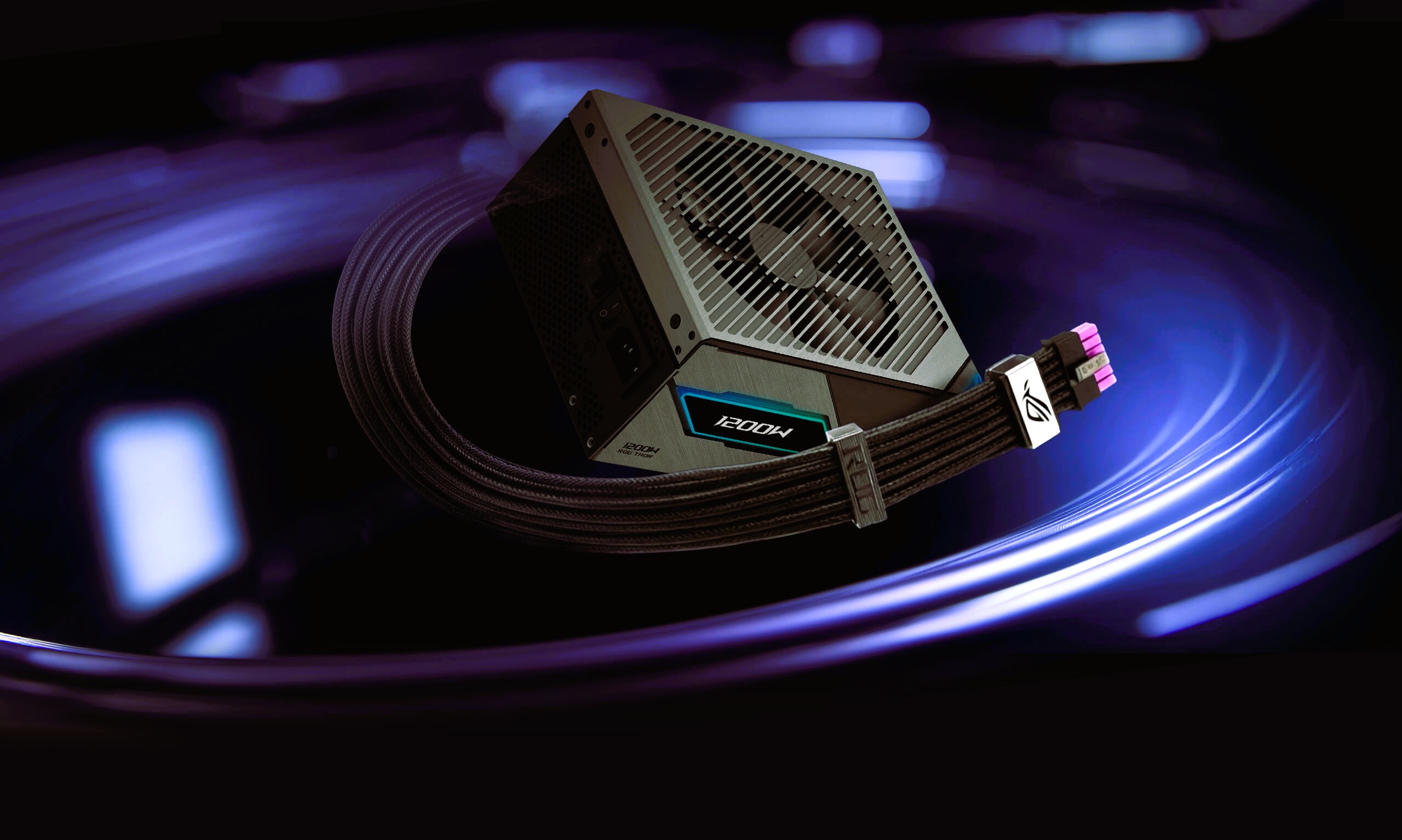
ASUS now wants to calm those nerves with a new cable called the ROG Equalizer, a 12V-2×6 power cable designed to reduce the risk of overheating by balancing electrical load across the connector’s pins. In other words, rather than redesigning the PSU or the GPU itself, ASUS is trying to solve the problem in the middle.
That alone makes it interesting.
A new fix for a very old PC hardware headache
The root of the issue is familiar by now. The 16-pin connector used on modern high-power GPUs has been tied to repeated reports of overheating and, in the worst cases, melting. That has left a lot of buyers wary of top-end graphics cards, especially in the RTX 50 series era, where “monster performance” and “please inspect your cable seating again” have become awkward roommates.
Manufacturers have responded in different ways.
Some have introduced new PSU lines. Others have rolled out revised cables and adapters. ASRock, for example, took a sensor-based route with an L-shaped 12V-2×6 cable that used an NTC sensor to monitor thermals. ASUS is going in a different direction. Rather than just detecting heat, the company says its cable is designed to reduce the conditions that create it in the first place.
Also read: USB Explained: The Universal Standard That Isn’t
What ASUS says the ROG Equalizer actually does
According to ASUS, the ROG Equalizer is built to distribute current more evenly across all pins on the 16-pin connector. That matters because one of the biggest suspected causes of overheating is uneven current flow.
When everything is connected properly, power should be shared across the cable’s conductors. But if some pins are not making proper contact, or the load ends up concentrated on fewer lines than intended, temperatures can spike quickly. That is when things get ugly.
ASUS claims the ROG Equalizer addresses that by increasing cable load capacity and smoothing out how the current is distributed before it reaches the GPU.
The company says the cable supports 17A per cable, versus 9.2A on more typical implementations. It also claims the Equalizer can hold temperatures to around 73.4°C even in a scenario where the four middle wires are removed, while a normal setup under those conditions could jump as high as 146°C.
That is a striking claim, and it gives the cable a very specific pitch: this is not just a fancier braided lead for premium builds, but a mitigation tool for one of the most persistent power delivery concerns in enthusiast GPUs.
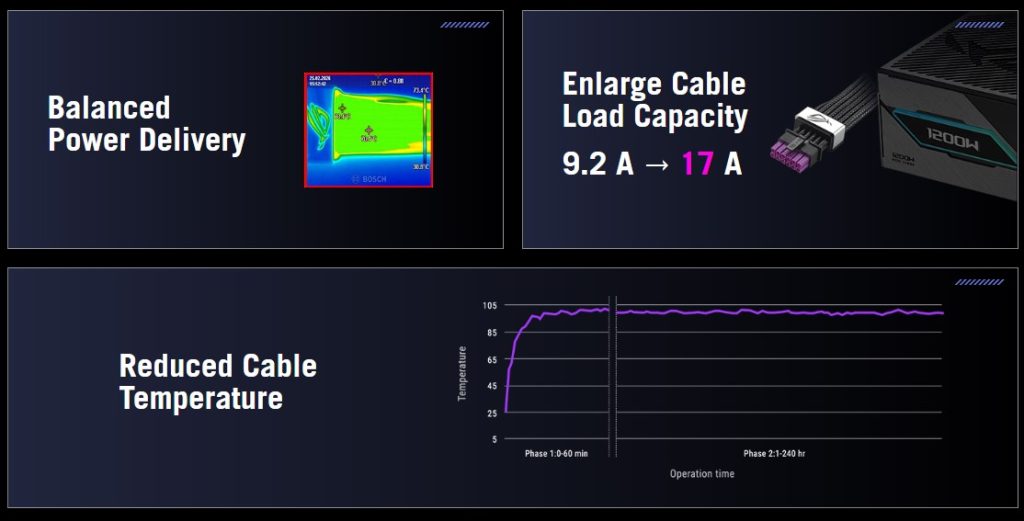
The secret sauce seems to be load balancing
ASUS has not fully detailed the internal engineering, but the likely idea is some form of impedance matching or resistance equalization across the wiring.
That sounds technical, because it is. But the practical version is simple enough: if each wire path is tuned to behave more consistently, the cable can help prevent one part of the connector from carrying more than its fair share of current.
That would be especially useful in a connector standard where uneven load distribution has become public enemy number one.
It is also notable that ASUS is positioning the Equalizer as compliant with ATX 3.1 and PCIe 5.1, which gives it a standards-friendly angle rather than making it sound like a one-off proprietary fix.
It is also very obviously a premium ASUS product
Naturally, this being an ROG product, ASUS did not stop at the electrical pitch.
The ROG Equalizer uses a dual-color cable design, includes multiple cable combs for cleaner routing, and comes fully braided. So yes, it is trying to solve a serious engineering problem, but it is also still deeply committed to looking like it belongs in a tempered-glass showcase build with enough RGB to guide planes at night.
That is not a complaint. In the DIY PC market, function and flair are rarely asked to live separately.
Availability is limited, at least for now
At launch, ASUS is bundling the ROG Equalizer with its 2026 ROG Thor III and ROG Strix Platinum power supply units.
That means it is not yet being positioned as a widely available standalone fix for every nervous GPU owner. Still, ASUS says the cable is compatible with ATX 3.1 and PCIe 5.1-compliant PSUs from other major manufacturers, which suggests broader flexibility if and when it is sold separately.
Pricing has not been disclosed yet.
That leaves one obvious question hanging over the launch: is this going to be a practical upgrade users can buy easily, or another premium accessory that mostly lives inside flagship PSU bundles?
What this means for the GPU market
The bigger story here is not just that ASUS made a clever cable. It is that board partners and ecosystem vendors are still spending time and engineering resources trying to work around a connector problem the market clearly does not feel has been fully put to rest.
That is not a great look for the broader high-end GPU ecosystem.
When accessory makers, PSU vendors, and motherboard brands all start building their own safety nets around a power connector, it usually means confidence in the original implementation is still shaky. ASUS deserves credit for trying to improve the situation, but the need for this kind of product says plenty on its own.
Final thought
The ASUS ROG Equalizer is a smart and very on-brand response to one of modern PC hardware’s most frustrating design controversies. If its load-balancing approach works as advertised, it could become a meaningful extra layer of protection for users running power-hungry GPUs.
It also highlights an uncomfortable truth: the industry is still patching around the 16-pin connector problem instead of fully escaping it.
So yes, ASUS may have built a better cable. But the fact that a “safer GPU power cable” is now a headline feature in enthusiast hardware tells you everything you need to know about how this saga is going.
