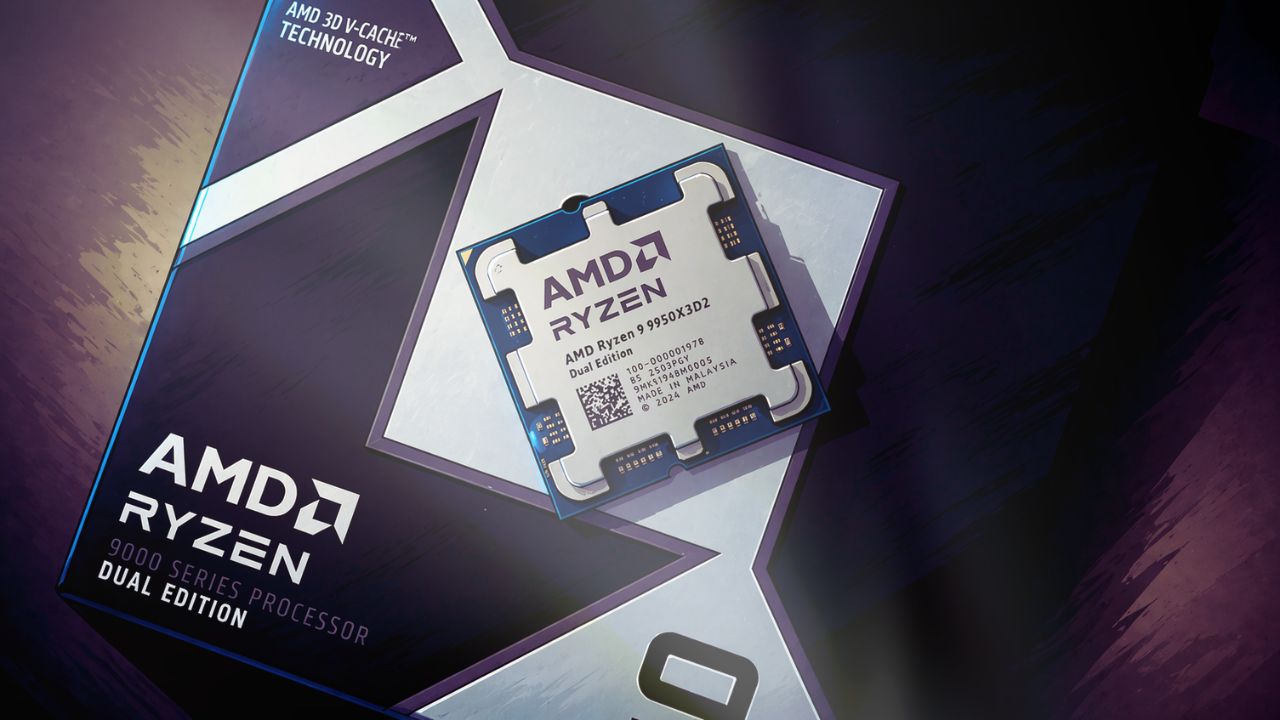
There are messy product launches, and then there are launches that make the whole review ecosystem look like someone started rearranging the furniture in the dark.
That is roughly the vibe around AMD’s Ryzen 9 9950X3D2 “Dual Edition,” a chip that should have been catnip for the enthusiast press. Big-name CPU, unusual design, plenty of room for deep analysis, endless opportunities to obsess over cache behavior and CCD quirks like the rest of us absolutely normal people. Instead, what we got was something stranger: several of the outlets best known for methodical CPU testing were left out of the review cycle entirely.
That does not automatically prove anything sinister. But it does make the launch look curated in a way that is hard to ignore and even harder to spin as ordinary PR housekeeping.
A flagship CPU launch without some of the flagship reviewers
The core issue is simple. TechPowerUp did not get a review sample. Neither did Gamers Nexus. Neither did ComputerBase. And those are not exactly random hobby blogs posting benchmark charts between keyboard unboxings.
These are the kinds of outlets people look to when a processor is complicated enough that the headline benchmark number is only half the story. A part like the 9950X3D2 is not just about whether it wins Cinebench by a few points or posts a pretty average in one or two games. It is about how the architecture behaves under different workloads, how the cache setup changes performance, how inter-CCD latency plays out, and whether the chip does anything odd when game scheduling and CCD parking get involved.
You know, the annoying details. Also known as the details that matter.
When the reviewers most likely to dig into those questions are missing from day-one coverage, it naturally raises eyebrows.
The review list looks less “broad outreach” and more “carefully trimmed garden”
This is where things start to feel uncomfortable.
Looking at the outlets that did receive samples, the pattern reportedly gives the impression of a more selective review strategy than usual. Not just smaller sites, but in some cases sites less known for exhaustive CPU analysis. That alone would not be a scandal. Companies spread samples around unevenly all the time. But the context matters.
If you are launching a $900 halo CPU and pitching it as a gaming showcase product, you would expect AMD to want the most skeptical, most technically obsessive reviewers possible to validate the story. That is how you build confidence. You throw the part into the harshest spotlight available and let it prove itself.
Instead, the rollout seems to have done the opposite.
And when some early reviews reportedly leaned on narrow test sets, including one that used just a single game and paired the chip with an RTX 4090, it only made the whole thing look shakier. That is not exactly the kind of methodology that settles debate around a flagship gaming CPU. It is more like handing in a book report after reading the back cover.
A CPU like this needs nuance, not checkbox benchmarking
This is really the bigger problem.
A complicated enthusiast chip does not deserve superficial coverage, and frankly, neither do buyers. A processor like the 9950X3D2 lives or dies on nuance. What games were tested? At what resolutions? With what GPU bottlenecks? How does it scale? What happens in real applications rather than the usual benchmark comfort food of Cinebench, 7-Zip, and AIDA?
Synthetic tests are fine, to a point. But they are also the fast food combo meal of CPU reviewing: cheap, familiar, and not enough to tell you whether the product is actually good in the ways that matter.
If AMD truly believed this chip could impress under a microscope, you would expect it to welcome the microscope.
Retail channels being locked down makes the optics even worse
Normally, even when review samples are sparse or oddly allocated, there is still the old fallback: retail.
That escape hatch seems to have been shut this time.
According to TechPowerUp’s account, retailers were given firm instructions not to sell or loan out 9950X3D2 units to media ahead of launch. Even longstanding personal contacts could not help, because AMD had apparently made it clear there would be consequences for any early press access through retail channels.
That is notable.
Because once you are not only curating the review sample list, but also closing the usual backchannels for independent early procurement, the whole thing starts to look less like logistics and more like message control. Maybe there is a benign explanation. Maybe supply is genuinely tight. Maybe AMD had reasons unrelated to review tone. But from the outside, the optics are grim.
And product-launch optics, as every PR team on Earth should know by now, are not some decorative side quest. They are part of the product story.
The unspoken fear here is obvious
Nobody needs to say the quiet part out loud, because everyone in this space already knows it.
When review access is limited in a way that excludes the most rigorous testers, people start wondering whether the company is trying to avoid unpleasant findings. Maybe that means inconsistent game behavior. Maybe odd scheduler issues. Maybe weak value. Maybe a chip that looks great in a simplified narrative and much less convincing once someone starts pulling at the threads.
To be clear, suspicion is not proof. It is entirely possible the 9950X3D2 is excellent.
But if that is true, this was still a bizarre way to launch it.
Good products usually benefit from independent scrutiny. Great products practically beg for it. When a company seems more comfortable with soft landings than deep dives, it invites the exact speculation it should be trying to avoid.
This is bigger than one AMD chip
The real issue is not just whether the 9950X3D2 turns out to be good, bad, or merely overpriced in a very premium sort of way.
It is about trust in the review process.
Hardware launches work because there is a basic pact between manufacturers, media, and readers. Companies provide access. Reviewers test products independently. Readers compare findings and make informed choices. The system is not perfect, but it generally works well enough because the most reputable outlets earn their credibility by being thorough, skeptical, and occasionally inconvenient.
Once access starts looking selectively optimized for friendlier coverage, that pact gets shakier.
And yes, companies have always played favorites to some degree. This is not a fairy tale industry where every review sample is handed out by a neutral wizard. But there is a difference between ordinary PR preference and a rollout that appears engineered to sidestep the people most likely to ask hard questions.
Checkout my other article: Bluetooth Latency Explained: The Gap Between Theory and Reality
The launch-day lesson for readers: read the methodology, not just the verdict
For consumers, the practical takeaway is straightforward.
Do not treat every day-one review as equally useful, especially for a processor like this. Check how many games were tested. Check the GPU used. Check whether the reviewer explored scheduling behavior, per-game anomalies, cache-sensitive workloads, and real-world application performance. If a $900 CPU is being judged on a tiny test set and a pile of familiar synthetics, that is not a full review. That is a trailer.
And trailers, as the games industry has taught us repeatedly, are not the same thing as the finished experience.
Final thought
AMD may have a great chip on its hands with the Ryzen 9 9950X3D2. That remains entirely possible. But the way this launch has been handled makes that harder, not easier, to believe with confidence.
When respected outlets known for deep CPU analysis are left out, and the usual retail workaround is reportedly locked down too, the story stops being just about silicon and starts being about access, control, and credibility.
That is a shame, because high-end PC hardware is already confusing enough without companies turning review day into a trust exercise.
If AMD wanted the 9950X3D2 to arrive as a showcase for engineering excellence, this was a funny way of showing it. Right now, the launch feels less like “here is our masterpiece” and more like “please admire the painting from this specific angle only.”